
Experiential Environmental Education Programs
Earthbound Academy provides structured, in-person experiential education programs for homeschool, worldschool, school, and alternative-learning students.
Through field-based instruction in environmental science, ecology, sustainable agriculture, earth science, cultural studies, and environmental leadership, students investigate real-world systems while developing practical skills, critical thinking, collaboration, and environmental stewardship.

5-Day Learning Itinerary & Instructional Focus
Review this sample schedule to see how our immersive modules integrate local ecology and heritage into daily studies. Each block focuses on specific fields, core themes, and active laboratory work.
Program Duration: 5 days | Total Program Hours: 40 | Structured Instructional Hours: 24 | Field-Based Instruction: 16 hours | Workshops/Reflection/Projects: 8 hours.
Day 1 — Welcome & Discover Puerto Rico
Focus: Geography • Environment • Field Study Skills
Students are introduced to Puerto Rico's geography, ecosystems, and communities while learning how to observe, document, and ask questions in the field.
Learning Activities: Mapping, field journals, observation skills, group discussion
Day 2 — Caves, Rivers & Ecosystems
Focus: Earth Science • Geology • Ecology
Students explore Puerto Rico's natural environment while learning about caves, karst geology, water systems, biodiversity, and the connections between land and living things.
Learning Activities: Guided field investigation, scientific observations, nature journaling
Day 3 — Farm to Coast
Focus: Agriculture • Biology • Environmental Science
Students investigate sustainable agriculture, soil, plants, and local food systems before exploring a coastal ecosystem and its biodiversity.
Learning Activities: Farm-based learning, hands-on investigation, coastal ecology study
Day 4 — Sustainability & Design
Focus: Sustainability • Design • Leadership
Students explore how people can design buildings, communities, and everyday solutions that work more effectively with the natural environment.
Learning Activities: Sustainable design exploration, team challenge, creative project
Day 5 — Culture, Community & Reflection
Focus: History • Culture • Arts • Community
Students explore Puerto Rican history, traditions, arts, and community while connecting cultural learning to the environment and experiences of the week.
Learning Activities: Cultural exploration, traditional arts, student reflection and sharing
Programs for Learners

For Families
For Young Learners
Ages 11-14: Enrichment activities focusing on diverse ecosystems and traditional skills in the field.
Ages 15-18: Leadership training, community action programs, and emotional resilience skills for the next generation. All programs are held in-person for maximum impact.
For Students & Young Adults
Customized place-based learning modules and eco-challenges designed to meet specific academic goals for visiting groups.
For Schools & Groups
Homeschoolers & Worldschoolers
Our living classroom provides the ultimate enrichment for worldschoolers, using the island to teach history, science, and local wisdom.

Beyond Traditional Schooling
At Earthbound Academy, we believe education means connecting students to the soil and their community. Our in-person programs teach beyond the textbook, helping homeschoolers and enrichment seekers develop a sense of environmental stewardship and social responsibility. Participants gain academic insight into ecological balance while building the adaptability and resilience needed to thrive in a changing world. We focus on hands-on experiences that turn every trail into a classroom and every project into a lesson in cooperation.
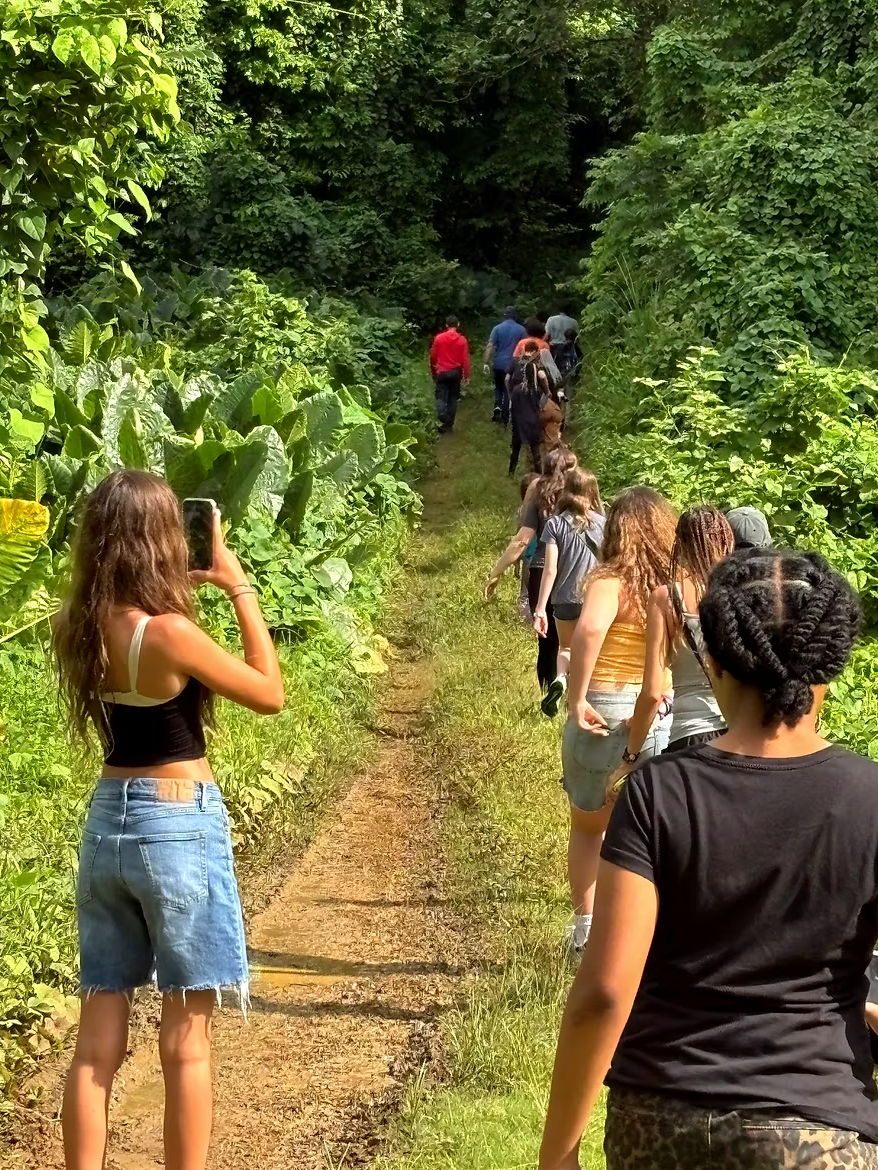
Customized Educational Programs
Earthbound Academy partners with homeschool groups, microschools, schools and educational organizations to develop customized, in-person experiential learning programs aligned with student age, academic goals and areas of study.
Examples of focus areas include:
Environmental Science • Biology • Earth Science • Sustainable Agriculture • Cultural Studies • Environmental Leadership